Automated mechanical assembly is at the heart of modern manufacturing, delivering unmatched speed, accuracy, and scalability across industries. As technology evolves, competitive manufacturers push boundaries by deploying innovative strategies that optimize these processes, resulting in superior product quality and enhanced operational efficiency. A growing number of advanced solutions—from AI-enabled predictive maintenance to vision-enhanced quality control—are now transforming how machinery is managed and assembled. For businesses seeking services for PCB assembly Andover MA, or broad assembly process enhancements, adopting the latest methods is essential to maintain a technological edge.
Intelligent automation, empowered by next-generation robotics, IoT, and 3D printing, is paving the way for flexible, responsive, and sustainable manufacturing. These enhancements reduce operational bottlenecks, minimize downtime, and enable organizations to respond more quickly to shifting demands and rapid innovation cycles. As pressure mounts to deliver smaller, more innovative, and more complex components within tighter tolerances, modern assembly lines must strike a balance between agility and reliability. Early adopters are discovering both operational gains and market advantage, setting new industry benchmarks in efficiency and sustainability.
Integrating Artificial Intelligence for Predictive Maintenance
Artificial Intelligence (AI) is transforming maintenance strategies in automated assembly by harnessing historical data and real-time sensor input to predict potential failures. Machine learning models analyze vibration, temperature, and usage patterns to forecast wear and identify anomalies before breakdowns occur. By pre-empting unplanned shutdowns, manufacturers can reduce downtime by up to 50% and significantly cut maintenance costs—figures supported by leading industry analysts and reports from McKinsey & Company. Predictive maintenance ensures optimal asset utilization and extends the life cycle of expensive machinery, reducing the total cost of ownership while safeguarding output consistency.
Advancements in Robotic Assembly Techniques
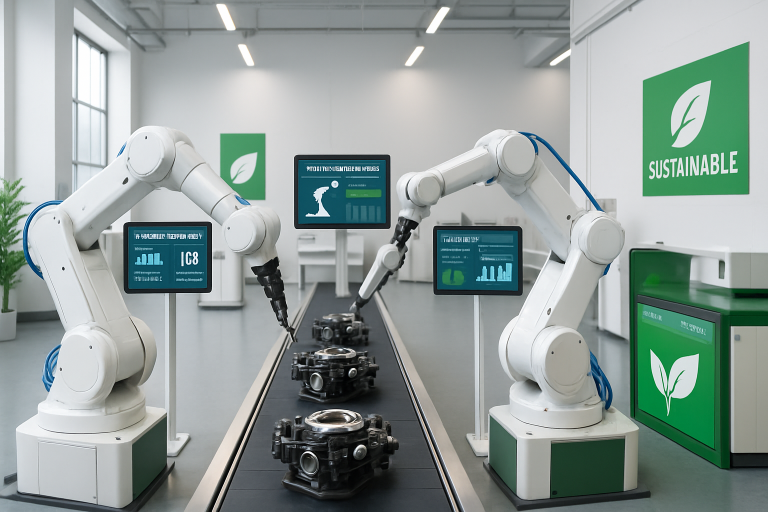
The maturation of robotics in assembly lines now enables efficient task execution at unprecedented speed and precision. Multi-tool grippers and advanced motion planning systems give robotic arms the dexterity to handle diverse and delicate components—even in high-mix, low-volume settings. Automated assembly cells benefit from articulated manipulators that mimic human flexibility, allowing them to transfer and position multiple parts simultaneously with minimal cycle time. These improvements drastically reduce manual labor requirements, empowering manufacturers to automate complex tasks that were once considered impractical for robots.
Leveraging 3D Printing for Rapid Prototyping
3D printing has revolutionized prototype development and customized part production, shortening the design validation cycle and accelerating innovation. With in-situ automated quality inspection now available in some systems, manufacturers can conduct thorough component checks without interrupting the build process. This seamless integration of additive manufacturing expedites the delivery of functional prototypes, allowing for quick iterations and fast feedback, which is vital for industries where time-to-market is crucial. As manufacturers prioritize flexible and cost-effective prototyping, the adoption of 3D printing in mechanical assembly continues to surge. For more details on industry developments, refer to this Forbes Technology Council article.
Implementing IoT for Real-Time Monitoring
The introduction of the Internet of Things (IoT) into automated assembly workflows has created a new standard for transparency and control. Sensors continuously relay data on performance, temperature, and cycle times, providing actionable insights for operators and engineers. Machine condition monitoring, powered by IoT connectivity, drives informed decision-making, preventive maintenance scheduling, and dynamic resource allocation. With connected assets, teams gain unprecedented visibility, quickly identifying anomalies and bottlenecks—ultimately supporting faster response times and improved operational efficiency.
Adopting Sustainable Manufacturing Practices
With sustainability at the forefront of manufacturing strategy, companies are integrating renewable materials and efficient resource management into their automated assembly processes. Reducing waste, optimizing energy consumption, and utilizing biodegradable or recycled materials not only lessens environmental impact but also appeals to socially conscious customers. Energy-efficient equipment, as well as solar-powered systems and closed-loop recycling, enable manufacturers to align automation improvements with their rigorous environmental goals.
Enhancing Quality Control with Vision-Based Systems
Quality control is critical to meeting rigorous industry and safety standards. Vision-based systems utilize high-resolution cameras and sophisticated computer vision algorithms to inspect each component during the assembly process. Capable of identifying micro-defects, deviations, or contamination, these systems ensure only compliant products proceed to market. Automated vision technologies eliminate human error, improve repeatability, and enable the scalable, non-stop inspection of high-volume output, ensuring consistent adherence to established quality benchmarks.
Utilizing Collaborative Robots for Complex Assemblies
Collaborative robots, or cobots, introduce the flexibility and intelligence required for intricate and multi-step assembly operations. Unlike traditional industrial robots that operate in isolation, cobots are equipped with advanced safety features and intuitive interfaces, enabling seamless collaboration with human operators. They’re particularly effective in micro-assembly or high-precision applications, where accuracy down to a few microns is required. This synergy of human and robotic expertise boosts throughput and enhances consistency across repeated cycles. For additional insights on the evolving role of cobots in manufacturing, review the BBC’s analysis of robotics in factories.
Conclusion
The integration of artificial intelligence, robotics, 3D printing, IoT connectivity, sustainable practices, vision-based quality inspection, and collaborative robots presents a holistic approach for taking automated mechanical assembly to new levels of performance and reliability. Manufacturers who rapidly embrace these paradigms will continue to drive industry trends and set benchmarks for productivity, innovation, and environmental stewardship in tomorrow’s connected factories.