Table of Contents
- Introduction
- The Rise of Self-Service Kiosks
- Benefits for Patients and Providers
- Case Studies of Successful Implementations
- Challenges and Considerations
- Future Trends in Patient Check-In Technology
- Conclusion
In the rapidly evolving healthcare landscape, self-service technology is becoming a game-changer in patient check-ins, driving efficiency and boosting patient satisfaction across medical facilities. Many health systems are rapidly adopting these solutions to address persistent issues like long wait times and administrative strain. By leveraging KIOSK’s patient check-in solutions, clinics and hospitals are able to provide a smoother, more reliable entry point for all types of patients.
These advancements are not just about convenience. They represent a broader shift toward digital health tools that better serve patients while easing the burdens on administrative staff. With the pace of innovation quickening, the trend toward digital check-ins signals an important step forward for healthcare infrastructure.
Introduction
The traditional patient check-in process is notorious for its inefficiencies, such as repetitive paperwork, long queues, and time spent waiting around. These hurdles negatively affect patient satisfaction and increase operational costs for healthcare providers. To confront these inefficiencies, many healthcare systems are transitioning to self-service kiosks and other automated processes to streamline the patient intake experience.
Modern self-service check-in solutions empower patients to manage their own intake information and alleviate administrative burdens. Importantly, these systems not only reduce bottlenecks but also open the door to new data security and accuracy benefits, as patients themselves confirm or update their personal and insurance information at the point of entry.
This movement is part of a larger wave of healthcare digitalization that extends to telemedicine, mobile health records, and AI-powered scheduling. The adoption of check-in kiosks, in particular, is surging post-pandemic as demand grows for touch-free, efficient, and patient-friendly experiences.
The Rise of Self-Service Kiosks
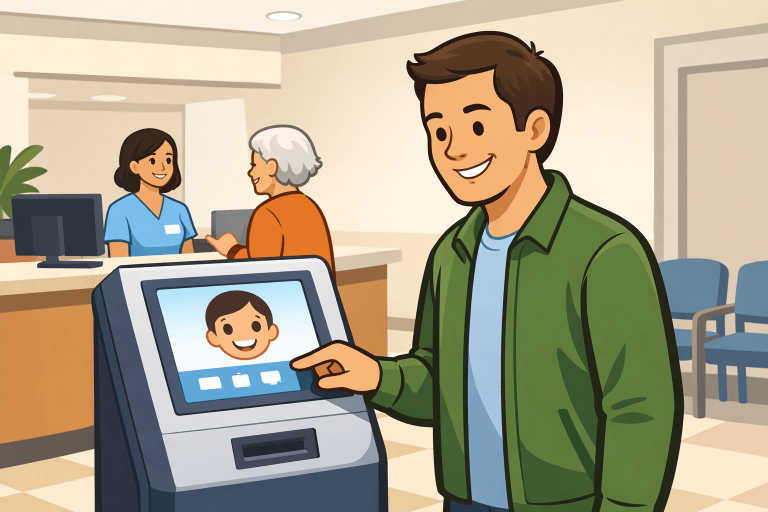
Self-service kiosks are now widely seen in outpatient clinics, specialty centers, and hospitals. Patients can use these kiosks to check themselves in, verify insurance information, sign consent forms, and, in some cases, make payments all without direct staff involvement. These kiosks speed up the process considerably and support social distancing requirements that have become the norm since the onset of the COVID-19 pandemic.
This growing reliance on digital infrastructure aligns with the broader healthcare industry trend toward patient-centered care. A key advantage of self-service kiosks is that they allow patients to retain control over their data and minimize unnecessary personal contact, which is particularly important for immunocompromised individuals or those concerned about contagious pathogens.
Benefits for Patients and Providers
- Reduced Wait Times: Fast-track check-ins mean patients spend less time waiting, and clinic staff can manage larger volumes efficiently.
- Improved Data Accuracy: Patients update contact, insurance, and medical data directly, minimizing transcription errors that can occur with paper forms or rushed conversations.
- Enhanced Patient Satisfaction: The autonomy to check in at their own pace gives patients a greater sense of control and comfort upon arrival.
- Operational Efficiency: Front desk staff are freed from repetitive administrative tasks and can spend more time on sensitive, complex needs or patient care questions.
By prioritizing automated intake, health organizations may also see reductions in no-show rates and improved adherence to scheduled appointment times. This ultimately translates into better patient outcomes and less wasted staff time.
Case Studies of Successful Implementations
Several large health systems provide strong examples of the benefits realized through self-service technology. For instance, Wellstar Health System partnered with CLEAR to deploy check-in kiosks across more than 150 locations. These digital solutions dramatically reduced average wait times and were credited with boosting patient satisfaction scores.
Another example comes from Nebraska Methodist Health System, which implemented a combination of online pre-registration forms and on-site kiosks. The dual approach helped streamline intake processes for both staff and patients, eliminating much of the traditional paperwork and cutting down on administrative bottlenecks. This system proved particularly valuable during peak COVID-19 periods, supporting safer and swifter check-ins (HealthTech).
Challenges and Considerations
Despite their benefits, implementing kiosk-based patient check-ins comes with meaningful challenges. Accessibility is a top concern, as not all patients feel comfortable with technology or may have disabilities that make using touchscreens difficult. Healthcare organizations must ensure kiosks are designed with a universal user experience, provide language support, and offer in-person assistance when necessary.
- Accessibility: Designing for all populations by including large screens, audio guidance, and multiple language options.
- Data Security: Protecting sensitive patient details demands strong encryption, secure authentication, and regular system audits to prevent data breaches or identity theft.
- Integration: Smooth coordination with existing electronic health record (EHR) systems and billing platforms is critical so that check-in processes do not become siloed or redundant.
Future Trends in Patient Check-In Technology
The evolution of patient check-in technology shows no signs of slowing down. Biometric authentication, such as fingerprint scanning or facial recognition, is emerging as a secure and convenient way to verify patient identities. Mobile health apps are also coming to the fore, enabling patients to complete check-in steps on their smartphones before they arrive or from their vehicles upon arrival, contributing to a truly contactless workflow.
Artificial intelligence is playing an increasing role, too. AI-driven analytics help providers predict patient flow, optimize staff schedules, and reduce bottlenecks across busy periods. The combination of these innovations points to a future where administrative friction is minimized, and patient care remains front and center. For more, see Health Affairs’ analysis of digital transformation in healthcare.
Conclusion
Self-service technologies are rapidly transforming the patient check-in journey, ushering in a more efficient, accessible, and user-friendly healthcare environment. While challenges remain, particularly around accessibility and integration, the benefits for both providers and patients are substantial. By embracing ongoing technological innovation and prioritizing patient-centered tools, healthcare organizations can elevate care quality while building more resilient and responsive operations.