Keeping your home secure and comfortable starts at the top—maintaining your roof is fundamental for preventing unexpected damage and extending the lifespan of your property. A proactive approach to roof care can save you costly repairs and ensure your family’s safety in all weather conditions. Working with an experienced roofer can help you catch minor problems before they become significant issues, ensuring long-term peace of mind.
Roof maintenance goes beyond simple repairs; it demands regular attention to detail and an understanding of potential trouble spots. Even if your roof appears to be in top shape from the ground, unseen threats may be developing in the attic, gutters, or under tree branches that can compromise its performance over time.
Neglecting basic upkeep can lead to water damage, structural hazards, or energy inefficiencies that affect your home’s value and safety. Whether you plan to perform routine checks yourself or hire experts for an annual inspection, building an effective roof maintenance strategy is a wise investment in your property’s long-term well-being.
For homeowners exploring more extensive repairs or upgrades, considering a timely roof replacement can restore your home’s integrity and energy efficiency, particularly if your roof is older or frequently experiencing issues that simple maintenance can’t address.
Regular Roof Inspections
Twice-yearly roof inspections—ideally conducted in spring and fall—are essential for identifying issues such as missing shingles, sagging, or rusting flashing before they worsen. Inspections after major storms are crucial. Early intervention can prevent more significant, costly problems. Taking photos can help you track the changes on your roof year by year and provide evidence if repairs require insurance claims.
Keep Gutters Clean
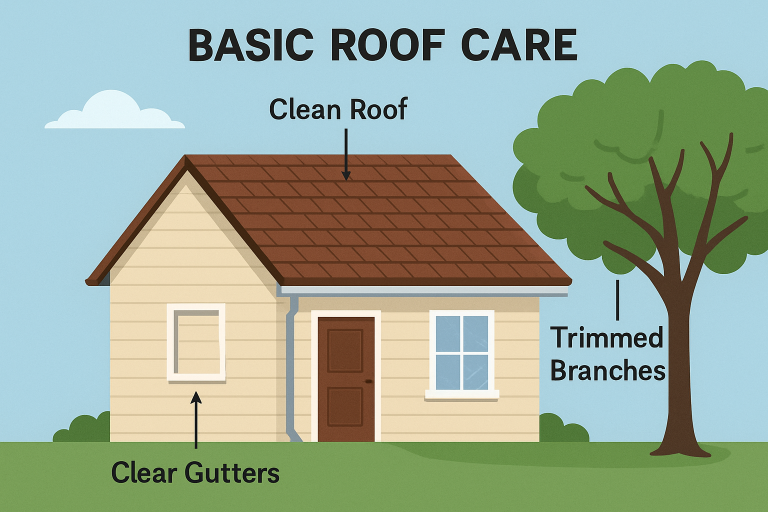
Gutters clogged with leaves and debris prevent water from draining efficiently, increasing the risk of roof leaks, siding problems, and even foundation erosion. In winter, blocked gutters can encourage the formation of ice dams. Clean your gutters regularly, especially in the fall. Installing gutter guards can reduce the frequency of cleaning and protect your home from water and pest-related issues. According to Better Homes & Gardens, regular gutter maintenance is one of the most crucial steps in maintaining a home’s entire exterior.
Trim Overhanging Branches
Tree limbs that touch or hang over your roof pose a constant risk to your home. As branches sway, they can scrape shingles, loosen flashing, and accelerate roof wear. During storms, overhanging limbs may break and fall, causing sudden and costly damage. Keeping branches trimmed at least six feet away helps prevent physical impact and reduces the accumulation of leaves and debris in gutters and valleys. This proactive step reduces maintenance demands, extends roof longevity, and improves drainage. Additionally, trimming discourages wildlife such as squirrels and raccoons from using branches as bridges to access the roof or attic.
Ensure Proper Attic Ventilation and Insulation
Without good ventilation, heat and moisture can accumulate, leading to mold growth, wood rot, and ice dams on your roof. Quality insulation and an unblocked airflow keep attic temperatures stable, improve energy efficiency, and protect roofing materials from warping or deteriorating. Use attic fans and inspect vents regularly to ensure adequate air circulation. More tips on attic ventilation can be found at the Home Ventilating Institute.
Address Minor Repairs Promptly
Small problems, such as minor leaks, cracked caulking, or a few missing shingles, can escalate into major headaches if left unaddressed. After storms or strong winds, give your roof a close inspection and tackle any damage ASAP. Timely repairs help maintain your roof’s integrity and can often prevent the need for a complete replacement before its expected lifespan.
Prevent Ice Dams
Ice dams occur when melting is reached, snow refreezes along the roof edge, blocking drainage and allowing water to seep under shingles. This can lead to leaks, mold, and interior damage. Preventing ice dams starts with proper attic insulation and consistent ventilation. In extreme climates, roof heating cables may also be installed to maintain safe temperatures along the eaves, boosting winter protection.
Monitor Interior Signs of Roof Problems
Even if the exterior of your roof looks flawless, damage may be brewing inside. Inspect your attic, ceilings, and upper walls for signs of water stains, mold, or musty odors. These can signal leaks or insufficient ventilation that needs immediate correction. In some cases, hidden mold requires swift remediation to prevent health hazards and further structural damage.
Schedule Professional Inspections
While routine DIY inspections go a long way, nothing replaces the keen eye of a seasoned roofing professional. Scheduling annual or biannual evaluations can reveal subtle issues you might miss and provide an expert assessment of your roof’s performance. Pros can also recommend maintenance, repairs, or even whether a roof replacement is your best long-term solution.
Building an ongoing relationship with a trusted roofer helps you stay ahead of problems and ensures you always have expert support when needed. With consistent attention and periodic upgrades, your roof will continue to serve as a shield against the elements for years to come.